
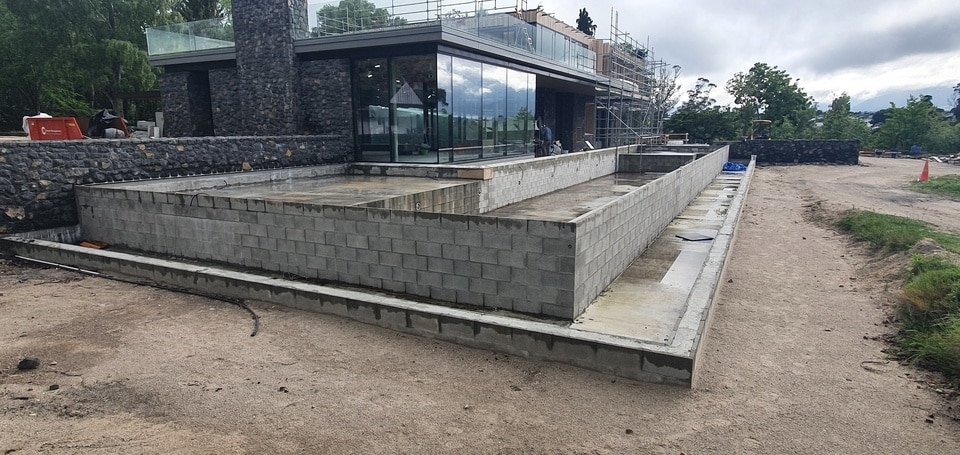
Pools are no longer just about function. Now, they are often the centrepiece of a well-designed outdoor area and feel like a natural part of the home. In Hamilton and Cambridge, more people are choosing concrete pools and spas as they look for both style and lifestyle benefits.
Concrete pools and spas offer design flexibility and lasting strength. With good landscaping and a solid care plan, your backyard becomes easier to use and maintain. This guide will walk you through design, budgeting, building, and daily ownership, so you can plan confidently.
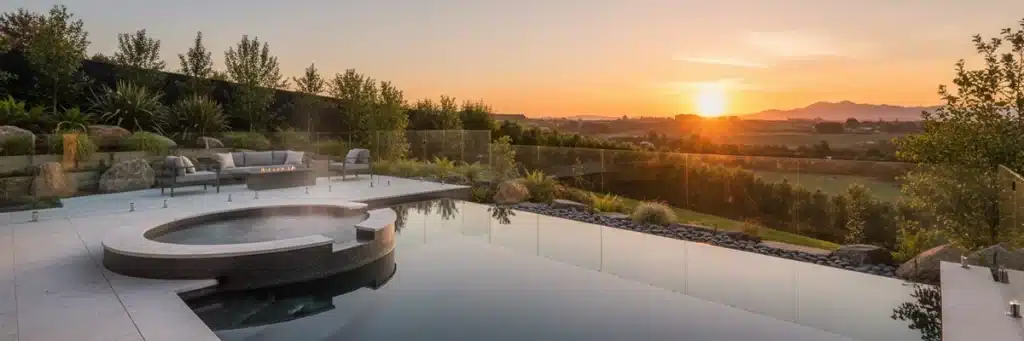
Concrete pools and spas suit homeowners who want flexibility, durability, and a tailored result. While fibreglass has its place, concrete gives you far more control over layout, depth, and finish. It also works well when a site has access limits or needs a more site-specific build plan.
Many people start by comparing concrete and fibreglass, since the choice affects both budget and timing. Fibreglass is often faster to install on flat, open sites, and the shell comes in a fixed shape. However, the size and design are limited by the mould and transport.
Concrete pools are built on-site, so you can shape the pool around your space and how you want to use it. You can set the depth, add ledges, adjust steps, and choose finishes that match your home. Over time, this flexibility also supports upgrades, such as adding a spa, changing tile, or updating features.
Some properties have narrow access, sharp turns, overhead trees, or not much space for big deliveries. In these cases, fibreglass can be harder to install because the shell needs a clear path. Since concrete is built on-site, it often works better for tricky locations.
Soil and drainage are important, too. A good contractor will check these early and plan the structure, drainage, and reinforcement carefully. This helps the pool last, especially on sloped sites or where the ground can move.
A concrete spa pairs well with a concrete pool because it fits into a single, unified layout. It gives you a warm spot to use during cooler months, which is great for Waikato evenings and in-between seasons. Many people also enjoy having separate areas for swimming and relaxing.
A well-designed spa area feels easy to use, not like an afterthought. Placing it in the right spot helps the flow between the spa, pool, and outdoor living area, making the space work better every day.
Cost is usually one of the first questions people ask, and it makes sense. A custom concrete pool is a big investment, and the final price depends on the design details. In New Zealand, most concrete pools cost between $60,000 and $120,000, depending on size, finishes, features, access, and landscaping.
This price range can cover excavation, the pool shell, tiling or interior finish, filtration, and some consent steps. It might also include extras like lighting, heating, decking, and a built-in spa. Since every site is different, it helps to decide on your must-haves first, then add from there.
Maintenance costs are important too. The good news is that modern pumps, robotic cleaners, and automated chlorination can make daily care easier and more consistent. Over time, a well-designed pool can add real lifestyle value and make your home more appealing to buyers, especially in areas where outdoor living is a priority.
Owning a pool is simpler if you plan for running costs from the start. Choices like heating, covers, and water care can affect both comfort and ongoing expenses. With the right setup, you can keep costs steady and enjoy your pool more.
Heating options and what they suit
A good cover can make more of a difference than you might think. Covers help keep heat in overnight, reduce evaporation, and keep debris out. This means you spend less time cleaning and balancing the water.
Water care is easier with the right tools. Robotic cleaners cut down on manual vacuuming, and automated chlorination helps keep water quality steady. Even with these tools, you still need a basic routine, but it is more predictable.
A big advantage of concrete is how well it fits different backyards. Whether your space is small and urban or large and open, you can shape the pool to suit your lifestyle. Next, focus on design choices that affect how you use the pool, not just how it looks.
The shape of your pool changes how you use it. A plunge pool is great for cooling off and quick dips, while a lap pool is better for fitness and longer swims. Family pools often work best with different zones, so kids can play while adults relax.
Depth is just as important. Shallow areas are good for lounging, safer entry, and easier supervision. Deeper spots are better for diving and strong swimmers, but they can make building and heating more complex. A good layout also helps the space flow naturally from the house to the pool.
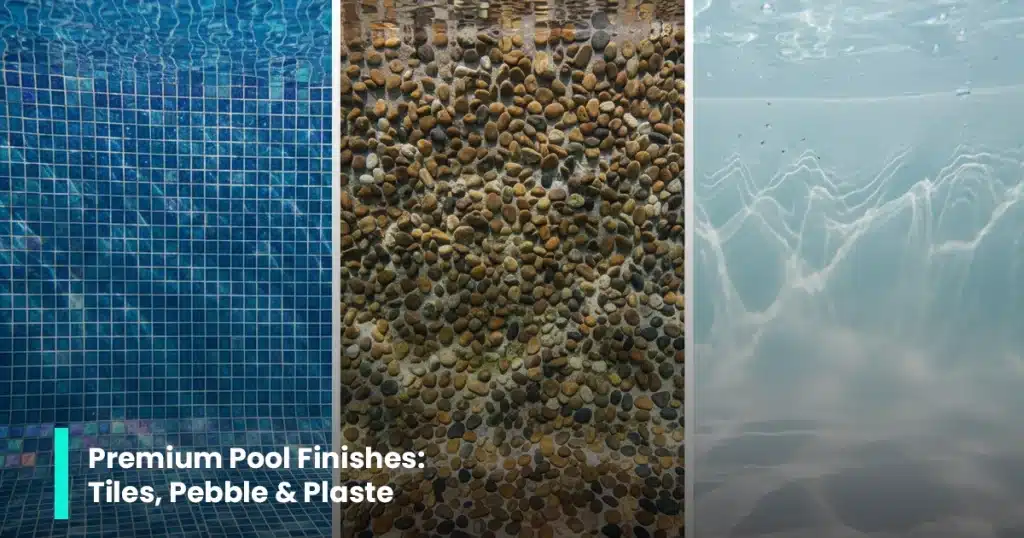
The finish you choose affects the look and feel of your pool. Tiles give a crisp, high-end look with clean edges. Pebble finishes create a more natural feel and add texture underfoot. Plaster offers a smooth, classic style that works with both modern and traditional homes.
Your finish also changes the water colour, especially with darker interiors. Dark tones can give a resort-style look, but they need careful planning for lighting and heating. For a timeless result, choose quality materials and balanced designs.
Some features feel “nice to have” until you use them every day. Covers reduce cleaning time and help retain heat. Wide steps improve access and make kids and older family members feel safer. Shallow ledges add a place to sit, play, or relax without needing deep water.
Outdoor showers are practical too. They help keep dirt and grass out of the pool and make swimming more comfortable. Plan for power points and equipment placement early to keep the area tidy and easy to look after.
If you already have a concrete pool, you might be able to add a spa with the right planning. You will need to think about plumbing, power supply, and space for equipment. It is also important to make sure the new spa fits well with your existing pool and paving.
Matching the finishes and levels helps the spa look like it belongs. It is usually easier to plan the spa with the pool, but adding one later can still work if the site allows.
A pool looks best when the space around it is planned with equal care. Landscaping frames the pool, supports privacy, and shapes how you move through the area. It also affects safety and ongoing upkeep.
Many people pick low-maintenance plants, often choosing hardy types that fit the local climate. Raised planters, garden walls, and built-in seating add structure and create places to gather. For surfaces, use non-slip materials and keep clear views across the pool.
Lighting also matters. It improves safety after dark and supports evening use. If you want a lower-maintenance setup, consider drought-tolerant plants, smart irrigation, and simple edging that reduces leaf drop into the water.
Most pool projects need to follow council rules, and safety is a big part of this. The details can change by location, but many builds need consents, inspections, and proper barriers. It is best to plan for safety and fencing early, not at the last minute.
Pool barriers usually need approved fencing and gates with self-closing, self-latching hardware. The main goal is to reduce risk and keep the area safe. If you wait too long on fencing, it can delay the final handover, even if the pool is done.
At LuxeOutdoors, we help you plan these steps early and coordinate them with the rest of the build. We also help design layouts that work well with fencing, access paths, and outdoor living areas.
Building a concrete pool has several steps, and good planning makes things go more smoothly. Most builds take about 6 to 10 weeks from excavation to your first swim, but timing can change based on weather, design, and council approvals.
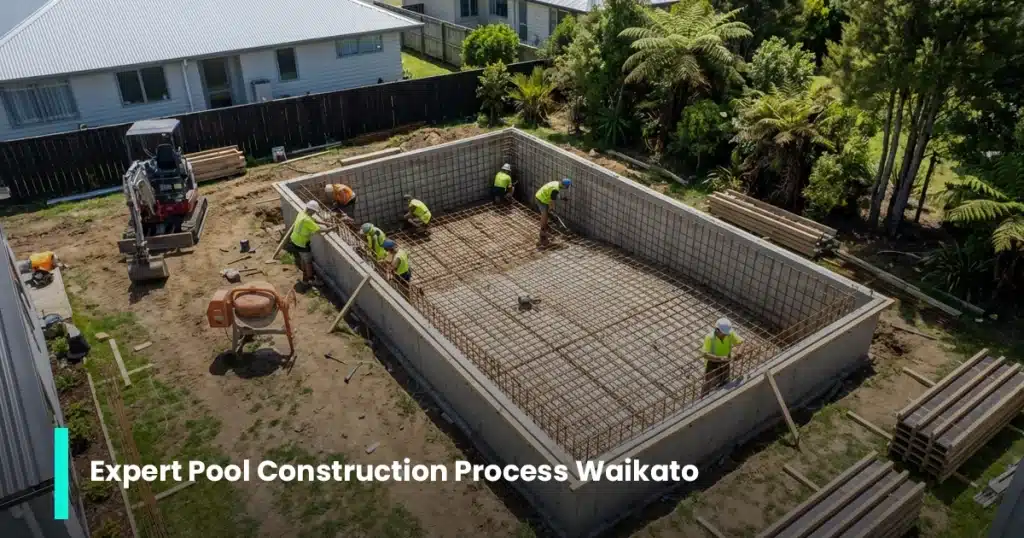
The process often follows this path:
A good contractor will give you a clear schedule and let you know about any changes early. This helps keep expectations realistic and the project on track.
Concrete pools can last for decades when built well and maintained consistently. That said, every pool needs routine care. The key is a simple plan that suits your lifestyle.
A practical routine often includes:
Many people now use automated cleaners and chlorination systems to make daily care easier. Covers also help by keeping out debris and reducing evaporation, which makes water care simpler. Over time, you might need to renew the interior finish, but the main structure can stay strong for many years.
Your contractor choice shapes quality, timeline, and how smooth the project feels. Look for clear communication, transparent quoting, and evidence of recent builds. If possible, visit completed projects and ask about the build experience, not just the final look.
Useful questions include:
A good contractor will answer your questions clearly and help you make choices based on how you want to use your space. At LuxeOutdoors, we tailor our approach, whether you want a small plunge pool or a bigger project with a spa and landscaping.
Concrete pools and spas are more than just lifestyle features. When designed well, they can add value and help your property stand out, especially where outdoor living is important. Custom design, quality finishes, and a well-planned landscape all make a difference.
LuxeOutdoors offers pool design, construction, and landscaping in Hamilton and Cambridge, and we also serve the wider Waikato and Auckland areas. We focus on clear planning, reliable service, and creating outdoor spaces you will enjoy every day.
A well-built concrete shell can last for decades. Interior finishes may need renewal over time, often within 10 to 20 years, depending on the finish and care.
A cover reduces debris and heat loss. It can lower running costs and help retain warmth overnight, especially when paired with heating.
Access, soil conditions, depth changes, heating, automation, and custom finishes often influence cost more than pool length alone.
Yes, in some cases. It is usually easier when planned with the pool, but a later addition can work with the right plumbing, power, and structural planning.