
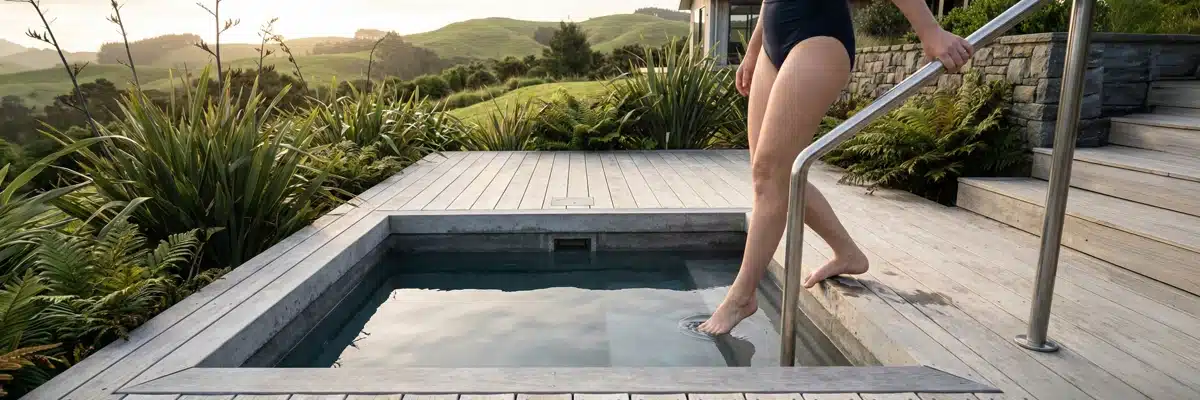
In New Zealand, the word plunge has two meanings. People use it when talking about starting something new, and you also feel it when stepping into cold water. In both cases, you commit, even if it feels intense at first, because you want the change that follows.
This guide covers both meanings in a practical way. We explain cold water immersion in simple terms, talk about the benefits people notice, outline the risks, and share safe ways to begin. We also show how this habit connects to the small, cold-ready pools many New Zealand homeowners are adding, and how we design them for long-term use.
A quick dip is simple. You step into the sea, a river, or a chilly backyard tub for a moment, then get on with your day. Cold water immersion is more deliberate. It usually means putting most of your body into cold water for a short, controlled time, with the aim of recovery, mood lift, or a reset after stress. Research and safety groups often describe this style of exposure as brief sessions in water around 4 to 15 degrees Celsius, rather than long stays.
People do it for different reasons, and we will unpack those next.
A cold dip session is not about showing how tough you are. It is about safe, controlled exposure. Most people start with water that feels cold but safe, and increase the time as their body gets used to it. Experts suggest starting with short sessions, about 30 to 60 seconds, and slowly working up to a few minutes. The aim is to keep your breathing steady and feel energised, not tired.
Water below 15 degrees can cause cold shock in many people, especially if you get in quickly. This is why it is important to enter slowly and focus on calm breathing from the start.
Here is what usually happens. Someone tries a cold ocean swim with friends, feels clear-headed after, and then wants to repeat that feeling without needing to check the surf every day. This leads to different ways to set up cold dips:
Each option can work. The right one depends on your lifestyle and how often you plan to use it.
People are drawn to cold water immersion because of what they feel in real time. Then, as the habit sticks, they often notice second-layer gains. Still, science is developing, so it is best to treat benefits as likely for some people, not guaranteed for everyone.
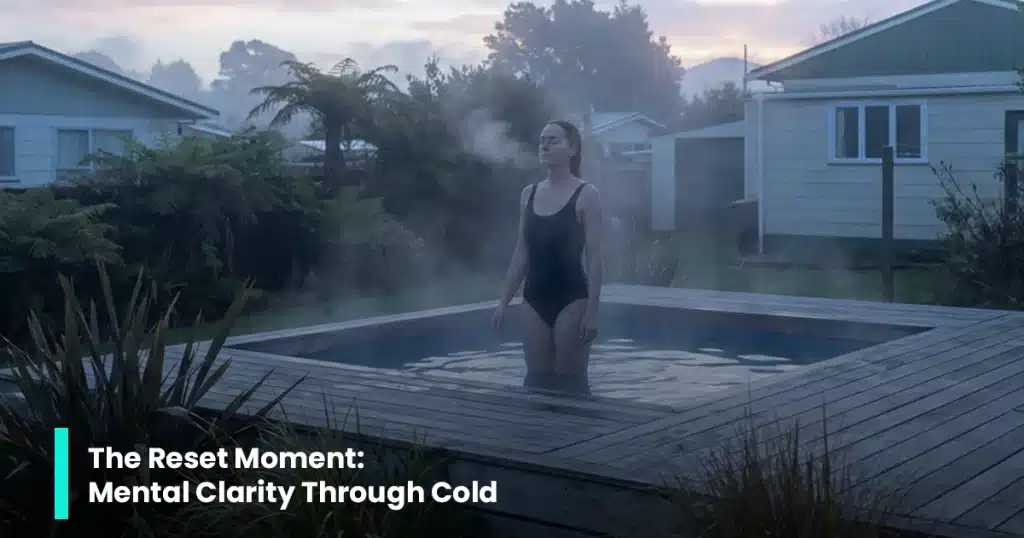
After a cold dip, many people notice a clear change. You might feel more awake, your skin tingles, and your mind feels clearer. You feel more present instead of lost in thought. These feelings are common and match the body’s stress response and endorphin release.
For example, after a busy weekend, a quick cold dip on Monday morning can feel like hitting reset. It will not fix everything, but it can change how you start your day.
Early studies suggest that controlled cold water exposure may help some people recover after exercise, improve circulation, and handle stress. Athletes often use it to reduce soreness after hard training. Some small studies also suggest better sleep and mood, but large studies are still limited.
So we should be honest. Cold water immersion is not a cure for illness. It is a tool that may support recovery and resilience for some people, especially when paired with good sleep, food, and movement.
Many people keep the habit for a simple reason. It gives a clear boundary between stress and calm. You step into cold water, your senses narrow, and for a minute, you are only dealing with breath and body. When you step out, the world feels less noisy.
This is why people talk about the benefits of cold plunges. The habit often helps people feel more grounded after a long day at work, a busy day with kids, or a period of low mood. However, if you are dealing with anxiety or depression, cold water immersion should be used with, not instead of, professional care.
Cold water can help some people, but it is not safe for everyone. In New Zealand, water below about 15 degrees can trigger cold shock, which affects breathing and can lead to panic or drowning in open water. Cold shock often starts with an involuntary gasp and fast breathing, so sudden entry into deep or rough water raises the risk.
Cold immersion also pushes heart rate and blood pressure up. If you have heart disease, rhythm problems, uncontrolled high blood pressure, poor circulation, or if you are pregnant, speak with a doctor before you try it. Even if you are healthy, staying in very cold water for too long can cause hypothermia or numbness, so keep sessions short and step out if you feel unwell.
Here is the simplest safe approach for beginners. Keep your routine steady and easy to repeat.
This approach keeps the habit safe and allows the body to adjust naturally.
New Zealand’s natural water spots are a big reason why cold water immersion is common here. Many people start with early morning swims at local beaches. Others dip in rivers after a run or paddle in lakes on calm mornings.
Conditions change with the season. In summer, water can feel inviting yet still sit below 15 degrees in many places, especially rivers and lakes. In winter, the cold is deeper, and shock comes faster. Water Safety New Zealand warns that even fit swimmers can lose breathing control quickly in cold conditions, so you need to treat natural water with respect every time.
A good habit is to choose familiar spots, go with others, and avoid rough conditions. Paying attention to local warnings is more important than trying to prove anything.
For many people, a home setup is about routine. You do not want to drive to the beach every time. You want a quick dip after work or training without a plan.
Portable tubs and barrels are common starters. They are predictable and low cost, but they still take effort to fill, cool, and clean. Purpose-built at-home features remove that friction. A good backyard cold setup means the water stays clean, the entry is safe, and your routine can fit into a busy week. This is why we see more people exploring a cold plunge in NZ homes as part of a wider wellness space.
A plunge pool is a small, deep pool designed for quick dips. It is not as big as a family pool and does not have jets like a spa. It is in between. Because it uses less space and water, it fits well in smaller yards and is great for people who want a simple reset dip instead of a full swim.
Some plunge pools are built mainly for summer cooling. Others are set up for contrast therapy, where you alternate between heat and cold. Either way, they are designed to do one thing well: give you a short, effective dip without needing a big footprint.
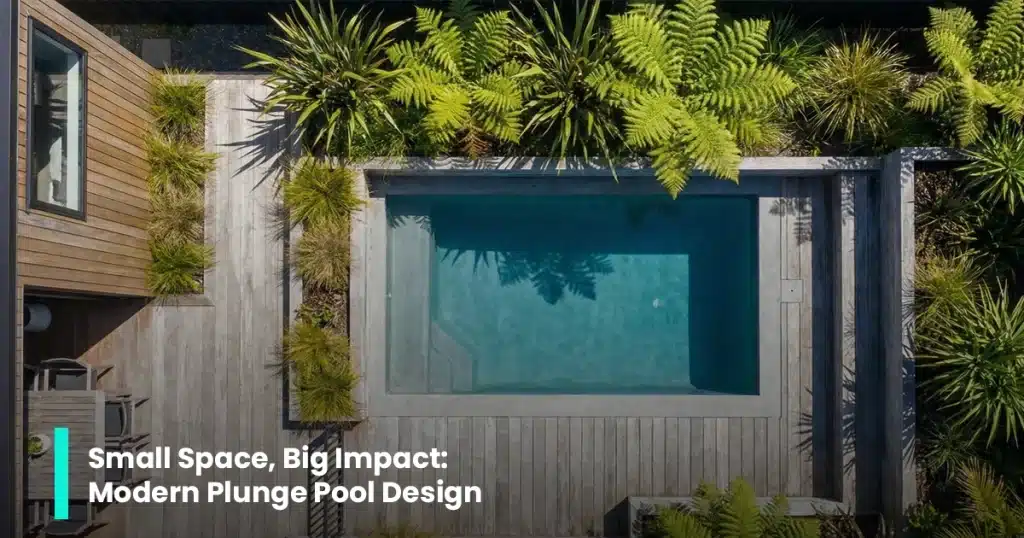
A full-size pool is for swimming, playing, and long family sessions. It needs more space, water, and maintenance. A spa focuses on seating, jets, and heat. A small deep pool is for quick dips and refreshment. These differences matter when planning your backyard and thinking about upkeep.
Most people we meet are not chasing a resort setup. They want something that fits between school runs, work hours, and training. A small deep pool can sit beside a deck, outside a gym room, or near a backyard sauna. It gives you a reset in minutes, without turning your garden into a construction zone.
Since the pool holds less water, heating and cleaning are usually easier too. You still need a good system, but daily upkeep is less work than with a large pool.
We build custom concrete pools and spas in Auckland, Hamilton, Cambridge, and Waikato, with over 40 years of experience. When someone wants a cold-ready dip space, we focus on how it will feel to use every day, not just how it looks on paper.
Site choice shapes your routine. A good spot balances privacy, access, and comfort.
If the pool is too exposed, wind can make winter dips unpleasant. If it is too hidden, you may stop using it because it feels like a trek. We often look for a place that is close enough to the house for easy access, but screened enough to feel calm. Sun and shade also matter. Shade keeps the water cooler in summer, while the sun supports warmth if you plan mixed use.
A small deep pool can be set up for different uses. If you want a quick cold dip, depth that allows full body immersion while standing or sitting is key. If you want it to double as a family summer pool, we might add entry steps and a wide ledge for sitting.
Shape follows your space. Some sections suit a clean rectangle. Others work better with a softer edge that matches existing planting and paths. Concrete allows full freedom here, so you are not stuck with a one-size outline.
Many clients want a pool they can use in all seasons. In summer, they want cool water for a quick refresh. In cooler months, they want a warm soak after a workout. We can add heating systems to keep the water at the right temperature when needed.
If you want the water colder than tap temperature, we can include chillers and smart circulation systems in the design. We always discuss the costs and maintenance of these systems upfront, so the setup fits your lifestyle.
A cold ready dip works best when it feels like part of the backyard, not an add-on. Our projects often include decks, tiling, planting, retaining, and fencing, so the space holds together as one outdoor area.
This matters more than most people think. If the path to your dip is slippery or messy, you will use it less. If the area is tidy and safe, it becomes part of your daily routine.
This is where your own routine is most important. Some people love natural water and will always go to the beach. Others want the same feeling but prefer to control the timing and temperature.
Ask yourself a few honest questions. How often do you want to dip each week? Do you want privacy? Do you want control over water temperature? Do you have space for a dedicated feature? Your answers help you work out which approach fits.
A well-designed backyard pool makes sense for people who want regular use, low-fuss maintenance, and a feature that stays valuable over time. It also suits households where more than one person will use it, so it becomes part of family life rather than a solo habit.
When you are ready, we follow a clear process. We meet at your site, discuss your goals, and check access, soil, and layout. Then we create a design and pricing plan that fits your property. We manage the build from start to finish, so you always know what is happening.
Our goal is simple. Your cold-ready pool should feel safe, easy to use, and right for your home, not just a trend you try once and forget.
It means short, controlled exposure to cold water to support recovery or a mental reset. It is not about long sessions or pushing through pain. It is about calm breath, a brief time, and a repeatable routine.
Most guidance points to water below 15 degrees for cold shock effects, but beginners should start with milder water. Early sessions can be under a minute, then build to a few minutes as you adjust. Always stop if breath control goes or if you feel unwell.
Many people feel more alert, clearer in the head, and less tense right after a session. Athletes may see reduced muscle soreness. Some people also report better stress handling over time, though research is still growing.
A cold dip can look simple from the outside, yet it often changes how people start their days. The first seconds feel sharp, then your breathing steadies, and you step out feeling lighter than before. For some, that habit stays in nature, with early swims at a familiar beach. For others, it becomes part of home life through a well-planned concrete plunge space that fits a tight section and a packed schedule.If you are ready to make cold dips a regular habit, start by thinking about safety and what you want from it. Then consider the setup that will help you stick with it. We are here to help, from your first idea to a finished backyard pool that feels reliable, useful, and worth doing again.